Pachinko: An immersion

Min Jin Lee’s Pachinko is a masterwork. The story begins with Hoonie, a quiet, resilient man whose death leaves behind Yangjin and Sunja. But as the pages turn, the focus shifts from mother to daughter, to in-laws and grandchildren, each carrying generational scars in their own way.

In Sunja and Kyunghee, I felt the pain of women in the extreme patriarchal society of Korea, hated Yoseb for being the head of the family, for overruling the women in his household who often made better, and more practical decisions. In Solomon, I recognized parts of my own daily struggles as an immigrant: of not knowing when I fit in and when I don’t, or even when I want to, and when I don’t.

The book is based on 20th century Koreans, primarily set in Osaka. With it, it brings the background of Japan’s annexation of Korea, racism, subjugation, and loss of identity of Koreans displaced, stories of families who move from Korea to Japan in search for stability. Min Jin beautifully narrates these struggles with historical context, first from annexation, through colonial oppression, later the second world war and the bits of pieces of news Sunja’s family hears about the Americans and the wars. At their best, Sunja’s was middle class family of Korean immigrants settled in Osaka, at their worst, they’d endured starvation, deaths, and unimaginable losses. Even at the very end, in Solomon’s adulthood in the 90s, we see impacts of stereotyping and racism on Koreans. The author doesn’t take us through the struggles of war from the front-lines, but explores it from the confines of the day to day of the hopes and dreams of Sunja: through their worn-out clothes and ingredients in their pantries.

I’d happily recommend this book to someone who’s looking for a deeply emotional work of fiction: one that is similar to Ruth Ozeki’s or Jhumpa Lahiri’s prose.
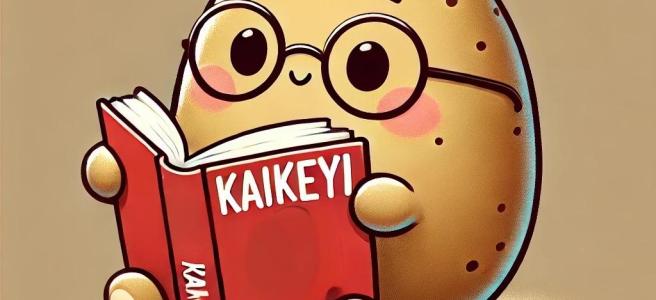
A trite read: Kaikeyi by Vaishnavi Patel

Kaikeyi, a character from Ramayana is rich with possibilities. She’s one of the wives of Rama’s father, the cause of Rama’s exile from Ayodhya, and by all accounts of the Indian mythology: an egotistic female filled with jealousy and surrounded by bad advisors.

Kaikeyi by Vaishnavi Patel’s parallel with Madeline Miller’s Circe is impossible to ignore: they’re both books that centered on a smaller female antagonist from the Epics they belonged to, and aimed to rewrite the story with a new, feminist perspective.

That’s also, unfortunately, where the similarities end. Where Circe is poetic, Kaikeyi is trite. Where Circe is a character still bound to make mistakes and missteps, Kaikeyi is ever misunderstood and mistaken. The magical elements in Kaikeyi are only part explained, and when they are – they seem rather rudimentary anyway. Some of the supporting reasons to believe in this positive spin of Kaikeyi are also very forced – particularly Ravana’s story arc.

All in all, this isn’t a read I would recommend, but if it’s on your bookshelf already – nothing sharp I would say to dissuade you either.

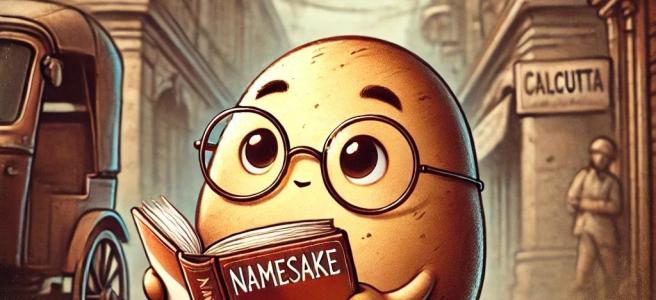
Moving Read: The Namesake by Jhumpa Nilanjana Sudeshna Lahiri

Given that the book is rooted in identity crisis borne from a child’s name, it only seems right to name the author with her full Bengali name. A name that she was given in London, UK by her immigrant parents who later immigrated to the United States when she was 3 years old. That Lahiri deeply understands identity shifts for immigrants was clear on display in the short stories of Interpreter of Maladies; in Namesake, it rubs you raw.

From the start of the book, I was hooked. I was hooked with dismay, as I realized I was in for an emotional read of yearning, longing, growth, grief, and heartache. So much heartache. The book is set in Massachusetts, revolving around the family of Gangulis – Ashoke, and Ashima, a newly married, arranged-marriage couple who settled in a land distant from Calcutta where they’re from. Ashima, having moved after the wedding to stay with her husband, goes through the heart-wrenches of missing festivals back home, missing her family, missing the food, and the Bengali culture, just like each of us who moved here from thousands of miles away. And just like each of us, Ashima and Ashoke slowly settle in, finding their circles of friends who substitute as uncles and aunts for their kids, finding their neighborhood Bengali supermarket, and tailoring new traditions around their festivals. Gogol, their first child, remembers with annoyance how all his birthdays were reasons for his parents to get their friends together, how the boisterous group of Bengalis would crowd in their living room, the pans of cooked food still in their cooking utensils atop the dining table, the endless rounds of food, drinks, and more food. The story then moves to focus on Gogol, as it would for the remainder of the book. I didn’t like Gogol, I didn’t like his entitlement, his disrespect for his parents, or his resentment of all things Bengali. Maybe I saw too much of myself in his parents, it’s hard not to.

As Gogol grows up, we see him make choices – from his friends, to romantic relationships, city he chooses to settle in, and who he chooses to settle with. We see the influence of the choices his parents made reflect in his choices, sometimes directly, sometimes through rebellion. The book follows Gogol’s life, through the everyday, but what touched me the most were the aspects of his parents, and his family back in Calcutta.

The book was heart-wrenching to read, for me, perhaps because it hit a little too close to home.

Satisfying story-telling: The Dark Forest by Liu Cixin

A satisfying wrap-up of all the different plot-lines, scientific theories, and character arcs. That Liu Cixin managed to tie everything together is astonishing to me – a feat I thought impossible even halfway through this read. I found this book to be more challenging of a read than the prequel (The Three Body Problem). There were more rambles, more story-lines that were seemingly unconnected to everything else, more characters, more scientific conjectures produced, and no semblance of a structure to the chaos. That the book skipped chapter markers caused me further pain.

All of which brings me back to this: that the book has a satisfying end to the chaos is mind-blowing to me, and the simplicity of that end is stunning. I think this might be a divisive opinion though, but one I’m happy to hold.

This was a frustrating read, one I’m happy to have gotten through for the story, but I had to stop myself from reading the preview of the last book in the trilogy, knowing that would only suck me into several more hours of this confusing read.

A Wonderful Read: The Dictionary of Lost Words, by Pip Williams

Heartache: emotional anguish or grief, typically caused by the loss or absence of someone loved.

OED

The emotion I felt turning the last pages of this poetry of a novel was heartache. A strange numbness, heaviness, and grief having read the lives of Esme, of Da, of Lizzie, of Mr. Murray, of Gareth, of Bill, of Dittie, and of Tilda. Of the women who lived through the heights of suffrage movement in Britain, of boys who grew into men in boots in the trenches of what is now called WW1.

The story revolves around a rather mundane task: creating an entire dictionary of English words, which would later get published as The Oxford English Dictionary. We meet Esme as a child, small enough to fit under the table of her Da at the Scriptorium, watching her father with amazement as he performed his ritualistic duties as a curator of words for the dictionary. I could relate to her awe, to her fascination to Da’s responsibilities, and in a way, to the life and reason of this child of the 19th century.

We watch Esme grow, we see her silent power, the influences in her life and how each of them shaped her, and of the parts of her that remained constant. We continue to relate to her silly rule-breaking, her small lies, her struggles, her decisions. I wondered if I’d have had the power to live through those years in that strange world.

The writing or the prose itself, is quiet – never overpowering the lives on the pages; and the story is shocking, stunning, beautiful, and agonizing in a way that can only be an accurate representation of reality. We watch Esme struggle with understanding the importance of words, and realizing words can hold differing meanings for men and for women, for the rich and the poor. We see her inadequate solutions for that problem. We see her struggle growing into a young woman in the era of suffragettes, of her questions on the methods of protest, her unwillingness to join the violence. We see her struggle with losses, too many of them. We witness the power of a village – of her people who pull her out of each loss, every time. It is all too relatable.

Set in a tumultuous period for women, the novel explores the importance of words, and what erasure of some could mean. The plot unravels this concept around the thick of suffragettes, suffragists, suffrage, the germination of feminism, the world of needless wars, upended lives, and most of all, of words.

Beautifully written, beautifully put together, this is a story and an emotion that I’ll hold close to my heart for years to come.

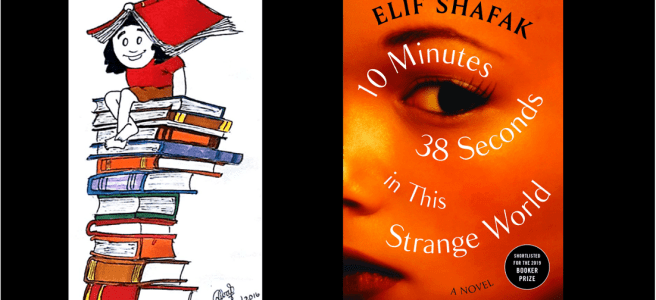
Disappointment: 10 Minutes 38 Seconds in This Strange World by Elif Shafak

I’ll start by saying I had no preconceived notions about this read before I picked it up. The only information I had on the book were from the blurb and cover, having received it as a gift from a friend. My disappointment therefore, stems entirely from the beauty of the initial parts of the book and the colossal carnage of the characters and plot that followed in later parts.

The author takes care to set out a detailed and exact representation of the world through part one, as she narrates the world through Leila’s eyes. The world is flawed, and the flaws exist for no rhyme or reason. The author explores this idea over and over again, through the numerous sufferings of her protagonist Leila – a woman abused in her childhood and exploited in Istanbul as she strives to create a life for herself. So real are the incidents in part one that the futility of hope and random allocation of privilege, luck and chance shine even when the protagonist is on the receiving end of such niceties. Leila is one of the lucky few to escape an acid throw with only a gash on her back, and is blessed with a regular marital life after being a whore at an Istanbul brothel for years. Even in the narration of these chance events for example, Elif takes time to note the jealously of Leila’s fellow prostitutes, showing that what Leila got was simply another unfair dose of luck that benefitted her instead of someone else this time. Part one is filled with such events which are deeply rooted in reality, each of which made me deliberate on this unfair life we lead.

Hence the sharp transition of part two into a Wodehousian affair led by Leila’s close friends (whose only similarity seems to be their eccentricity) shocked, infuriated and disappointed me as a reader. The five friends of Leila, once so beautifully described through Leila’s thoughts now were skeletons of characters, each easily explained by one adjective – the devout, the cowardly, the loyal, the sick and the other (who didn’t even matter in the end.) The characters take some insane decisions that would never pan out, and go about enacting it through painful chapters that read like a young-adult fiction with a diverse set of characters. It made the beautiful characters from chapter one seem like they were only there for a diversity quota.

Part three of the book speaks about the soul of Leila, now demised. This is so antithetical to every open ended question in the book on the existence of souls and whether they were only religious constructs.

A book with amazing promise and a sharp let-down. I highly recommend that you skip this book unless you want to experience investing in a disappointment.

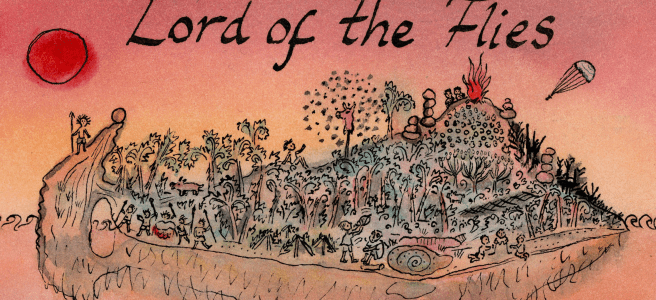
Lord of the Flies by William Golding

A book from all the way back in 1954 that struck my heart red hot today as I trembled and shook, turning the pages in absolute fear, completing this read.

This book brought me to tears and it took me a while to bring myself back to reality. What starts out by being a rather playful narrative of kids lost on an island awaiting rescue takes a number of dark turns, and one of them struck awfully. The incidents escalated to their tremendously dark end, and the I felt myself breathe in panic alongside the characters as I ran, wept, hurt and hid in my fears. I wish the characters had been made more relatable through a scale of grayness instead of making them the very extremes of their traits, but that was a creative decision that still did work and hurt me enough to bring me to my knees internally as I begged for mercy from the pain that haunts the book through eerie events and troubling reality. I do agree with a number of other reviewers that some of the author’s decisions made it easier for me to extract myself from the pages, and it wasn’t as troubling or real as it could have been – but what it was by itself is quite a potent shock and I felt myself walking the world of Ralph and Jack as I turned the pages and finished the book in one sitting.

– Swathi Chandrasekaran

Lover of books and on the look out for books that made you linger on the pages, thoughts or troubles of worlds far away, unreal or terrifying. Find me here on Goodreads and let’s talk more books!