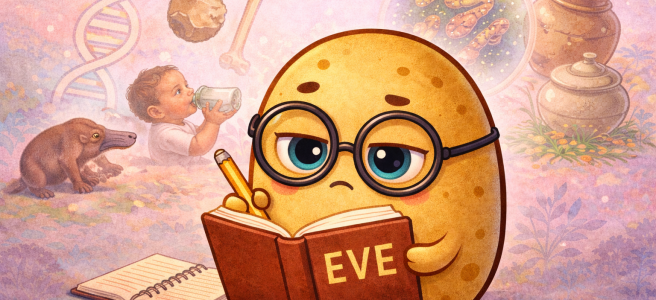
Onto Chapter 2 – Womb, where more of my utter lack of knowledge is revealed in the form of things that I learnt.
Horrors of Motherhood
- Many salmon species die soon after spawning eggs, mostly due to the strain the upstream journey demands from them. Their corpses fertilize the waters for the new hatchlings.
- More terrifying are certain species of fireflies, which don’t possess mouths as adults. They live frenzied lives aimed at reproducing, laying eggs, and dying before they lose all the resources their body has consolidated from their pupal stage. I’ll never be able to see fireflies the same.
Most marsupial babies are born at what humans would call an ‘incredibly underdeveloped’ state, or about 7 weeks into what a human baby would be. They are born with absurd forearm strength though, and are able to hoist themselves and clamber into their mother’s pouches. Researchers have recorded ultrasound videos of wallaby fetuses practicing this movement in their mother’s wombs! Here’s a video of it, maybe it would make more sense to you than it did to me.
Placental Wars
The placenta is one of the only organs in the world made by two separate living organisms – both the embryo and the mother contribute to it.
Preeclampsia, with an occurrence rate of over 5% in American women, is a life-threatening high blood pressure disorder associated with pregnancy. While the disorder can be controlled through frequent checks and blood pressure medication, the only real cure for it is to deliver the baby and placenta. It is caused by two proteins in the uterine lining that are responsible for increasing blood pressure in the arteries to enable the delivery of more blood and nutrients for the growing fetus. When they overdo their job, they cause higher blood pressure which leads to preeclampsia. There is interestingly, a third protein in the mix whose role was understudied until recently.
After implantation, the placenta sends out trophoblasts—cells that attack the uterine lining to secure resources for the embryo. The mother’s body doesn’t exactly greet this politely; it responds like an immune system confronted with an invader. So the mother’s body retaliates and attempts to decimate these invading trophoblasts. The human placenta, a step ahead, has devised sneaky ways to avoid this!
PP13, the third protein we spoke about, attacks veins around the uterus to cause a distraction for the trophoblasts to get in and do their thing.
In a healthy pregnancy, we want the placenta and the uterus to be in this war for 9 months, with neither side winning – a happy stalemate. If the placenta starts losing, it brings out more trophoblasts, causes more inflammation to veins in the uterus, and generally causes more havoc and brings on preeclampsia to the mother.
Ah, the wonders of motherhood.
Studies on the pros and cons of pregnancy are confusing:
- Women who never give birth are less likely to develop autoimmune diseases compared to women who have given birth at least once.
- Women who have given birth in their 20s are less likely to be at risk of certain kinds of cancers compared to women who have never been pregnant.
Also in the chapter:
- Chicxulub, the apocalypse from an asteroid, 66 million years ago which wiped out all non-avian dinosaurs.
- Permian Extinction Event, The Great Dying, considered the largest extinction event on our planet, 250 million years ago.








 Perplexed Potatoes