A Good Read: Our Women on the Ground: Essays by Arab Women reporting on the Arab World

I certainly won’t remember all the timelines and specific details of wars from this read, but I’ll definitely remember the emotions of these women as they lived through those moments.

Was a wonderfully fresh look into the lives of female journalists in the Arab world. It dispels some stereotypes and perhaps reinforces some, but mostly brings out the nuances that we miss out on when we look at policies and politics with only a bird’s-eye view.

A Wonderful Read: When the Emperor was Divine by Julie Otsuka

Page 106 and I was already shaking tears off. Otsuka’s unrelenting prose wears down every emotional defense you’ve set up until you’re going through the raw emotions of a young boy, his aging single mother and his iconoclastic teenage sister paying the price for the crime of their birth place and time – they were of Japanese descent, born on the very American soil of 1942 California.

We often forget how systemic the oppression was – that the postmen made snide or overt insults at Americans writing to their Japanese neighbors, that school children were frowned at for waving a hello to their once-equal classmates, that jobs were scarce after Pearl Harbor or of the Japanese-American’s sheer identity crisis when they barely spoke Japanese and lived in a society where Pearl Harbor was deeply entrenched in memory.

And it’s a straight line from subtle WW2 American-racism to today. It’s a straight line to our violin teacher refusing to teach a non-brahmin child, the school that undeniably rejected applications on the basis of caste, the schoolyard gangs formed and the hellos that were never heard on the basis of systemic racism, casteism, sexism or xenophobism.

1942 to 2021, the system lives on. Julie’s effortless prose makes it easier to see.

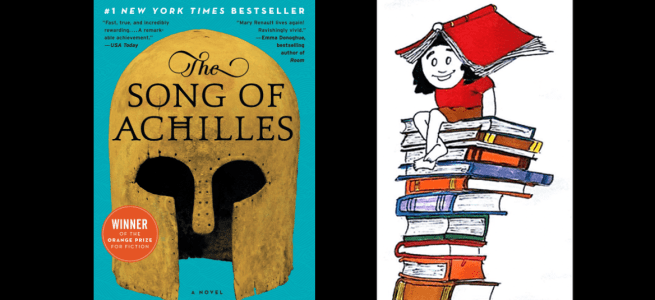
A Wonderful Read: The Song of Achilles by Madeline Miller

My favourite novels are the ones that tread the boundary of prose and poetry – The Circuit, Lord of the Flies, Dalrymple’s Nine Lives, The Book Thief, The Far Field, Miller’s Circe and now, The Song of Achilles. Miller’s acclaimed book on Achilles occupies its space on this precarious boundary easily, rightfully.

The Greek myth is already potent in imagery with its brave, strong humans, Gods of mischief, wars that push the horizons of imagination, magic and madness. In Miller’s skillful retelling, one can hear every wry word uttered by the charmingly crafty Odysseus and witness the golden haired Achilles dancing his lethal dance with his sword.

The art of Miller moves Achilles from the Godly realms of mythology to one who can be cherished and celebrated even more, through the crude humanity of his character. Ironically for a Prince who traded his life for immortal fame to become a Hero, it is his inseparable humanity that defined this read and captured me in it. His young conscience’s hesitations, doubts, helplessness and ego are so relatable that one can empathize with the young Achilles in his poignant moments.

The telling of this poem in Patroclus’ voice was a choice of genius. Who better to retell this tale of heroism than the utterly average mortal companion that Achilles chose? Achilles, who had all the young men line up in the hopes of being chosen as his trusted counsel instead picks Patroclus – a scrawny orphaned nobody who is defenseless in wars of both swords and words. And it is in this trusted counsel that Achilles finds himself to be more than the prophecy of a hero. For Patroclus sees Achilles as human first, and in turn, Achilles is grounded in the essence of being mortal.

And thus Miller transforms Achilles from just another Greek mythology’s war statistic (poor Heracles, Hector, Philoctetes, Ajax and innumerable others) to a hero in all his imperfections, immortalizing him in his humanity. I for one, grieved more for this Achilles’s expected demise than for Achilles the God or Achilles the Hero’s.

I’d recommend this book without hesitation to anyone looking for a fast paced work of fiction that can move you to a different world with Miller’s melodic writing and unforgettable characters. And I can’t wait for her next epic.

– Swathi Chandrasekaran

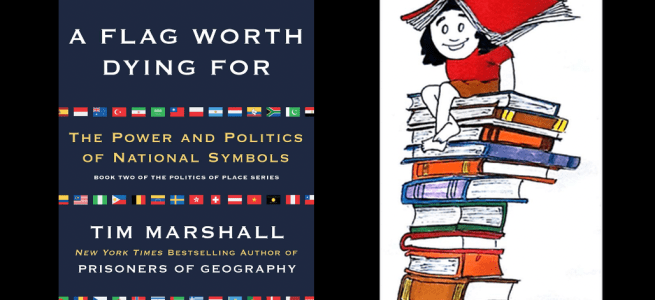
A Good Read: A Flag Worth Dying For by Tim Marshall

A book filled with intelligent trivia that’s tainted by the author’s commentary. Even for a geo-politics newbie like me, Marshall’s biases were impossible to ignore. Perhaps if you avoid the ‘Flags of Terror’ chapter and the author’s relentless obeisance to the United States, the book would make for a spectacular read. It’s a treasure trove of the histories of nation’s flags written in a highly capable journalist’s immaculate way of stitching the world together. Unfortunately, those biases do exist, and the Flags of Terror chapter is a central part of the book, both of which fell uncomfortably on my boundaries of bearability.

I’ve had my fair share of obsession with flags of the world, and questions like “Why are the Mexican and Italian flags so similar” have certainly entertained me. So this book was fantastic – at the least, it informed me on which questions were worth pondering more on and which of them were truly inconsequential (The Mexican-Italian coincidence, for instance.) The optimistic chapter on Central and South American flags (Flags of Freedom) and the chapter that quickly and efficiently analyzed the African flags were some of the high points of the read.

If the narration hadn’t so obviously been affected by Marshall’s political views, this book would have been an instant recommendation from me. As it stands, I’ll add the disclaimer and assert that it’s still worth a read. However, I’d recommend one to read Prisoners of Geography first, Marshall’s more recent release which, while still being opinionated, is more reasonably so.

– Swathi Chandrasekaran

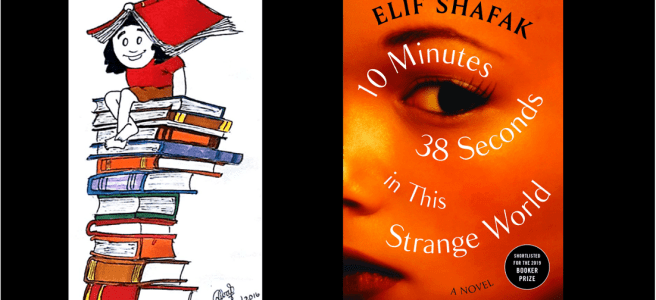
Disappointment: 10 Minutes 38 Seconds in This Strange World by Elif Shafak

I’ll start by saying I had no preconceived notions about this read before I picked it up. The only information I had on the book were from the blurb and cover, having received it as a gift from a friend. My disappointment therefore, stems entirely from the beauty of the initial parts of the book and the colossal carnage of the characters and plot that followed in later parts.

The author takes care to set out a detailed and exact representation of the world through part one, as she narrates the world through Leila’s eyes. The world is flawed, and the flaws exist for no rhyme or reason. The author explores this idea over and over again, through the numerous sufferings of her protagonist Leila – a woman abused in her childhood and exploited in Istanbul as she strives to create a life for herself. So real are the incidents in part one that the futility of hope and random allocation of privilege, luck and chance shine even when the protagonist is on the receiving end of such niceties. Leila is one of the lucky few to escape an acid throw with only a gash on her back, and is blessed with a regular marital life after being a whore at an Istanbul brothel for years. Even in the narration of these chance events for example, Elif takes time to note the jealously of Leila’s fellow prostitutes, showing that what Leila got was simply another unfair dose of luck that benefitted her instead of someone else this time. Part one is filled with such events which are deeply rooted in reality, each of which made me deliberate on this unfair life we lead.

Hence the sharp transition of part two into a Wodehousian affair led by Leila’s close friends (whose only similarity seems to be their eccentricity) shocked, infuriated and disappointed me as a reader. The five friends of Leila, once so beautifully described through Leila’s thoughts now were skeletons of characters, each easily explained by one adjective – the devout, the cowardly, the loyal, the sick and the other (who didn’t even matter in the end.) The characters take some insane decisions that would never pan out, and go about enacting it through painful chapters that read like a young-adult fiction with a diverse set of characters. It made the beautiful characters from chapter one seem like they were only there for a diversity quota.

Part three of the book speaks about the soul of Leila, now demised. This is so antithetical to every open ended question in the book on the existence of souls and whether they were only religious constructs.

A book with amazing promise and a sharp let-down. I highly recommend that you skip this book unless you want to experience investing in a disappointment.

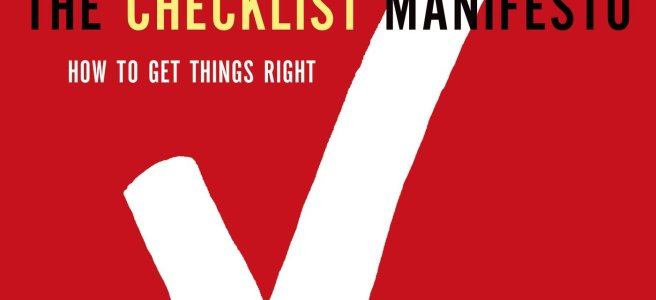
Thoughts: The Checklist Manifesto by Atul Gawande

The overall theme can be baked down to a single line: You’re better off with checklists. I wish the author had gone into more concrete arguments about why many fields are slow to cultivate this habit instead of simply diving into examples where it has worked. The fact that checklists work seems intuitive enough to not have to defend it over 150 pages, although the author repeatedly stunned me with the magnitude of improvement in each case and deserves a lot of credit for digging out the data driven results.

My biggest snag with this book is that the author never takes the time to define what exactly a checklist is, and yet devotes 200 pages on anecdotes where it has worked. Everything seems to loosely fit into what a checklist can be and everything from a chef’s recipe to a construction process diagram is categorized as a checklist. Therefore anything that gives a semblance of order is a checklist and everywhere it works or is the lynchpin of a complex system is a success story. With a definition this broad, it’d be surprising if it didn’t work.

I’d have preferred a case for checklists to be made taking into account their drawbacks – the loss of autonomy, culling of creativity (follow this recipe and nothing else), the plain banality and how mind-numbing it is etc. instead of relegating these into a single chapter in the end of the book. The writing is mediocre at best, and reads more like a blogger speaking about a system that brought order to his company instead of a bestselling author devoting as many pages to substantiate an idea. I’d recommend readers to look at some notes and summary for this book and save time (Sam T Davies has a good short post here that suffices, or you can check Graham’s post here for a longer play by play). My take on it – skip the book, read the notes and figure out how you can incorporate it in your day to day – another aspect the author happily skips.

Board Game Puzzles

A quick list of puzzle based boardgames:

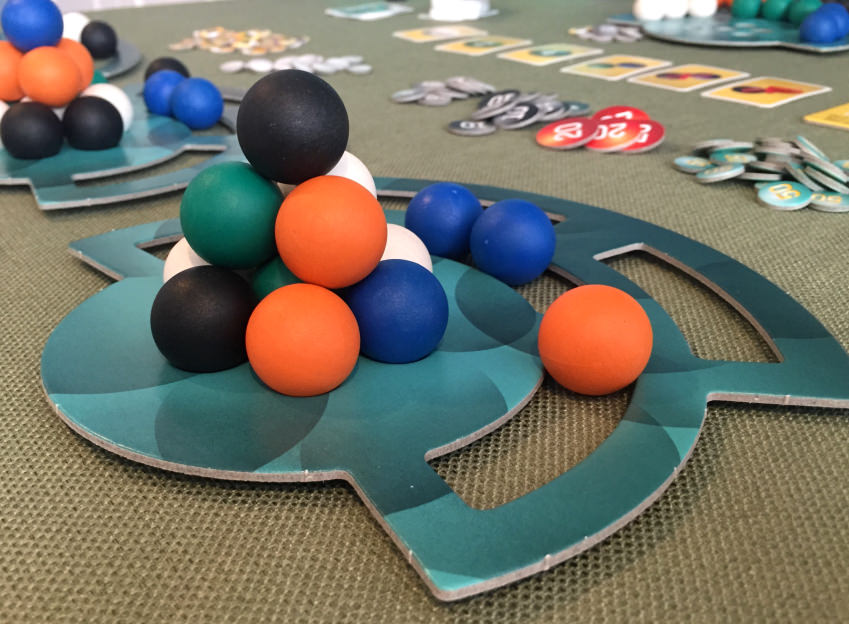
  • Dimension: This is a competitive board game where you race against friends and foes to follow spatial rules in arranging spheres. Sounds simple? The timer is your primary enemy and your optimization skill is the best friend. It’s easy to learn and I found it remarkably simple to teach my 9 year old niece and start playing.
Image result for Dimension game
  • Ricochet Robots: A classic puzzle game that barely passes as a board game. Players compete to form the shortest path for pawns on the board to reach a target. Everyone controls the same pawn, and most of the game is spent in thinking of solutions and bidding for the shortest. This makes it a very cool single player game as well, and there are plenty of mobile applications that ape this game.
  • Chessformer: This is a mobile game you can play on rob1221.itch.io which is a 2D chess game where the pieces fall down after moving to the lowest level. Aim is as always to capture the opposing King (who, to make things easier, never moves)
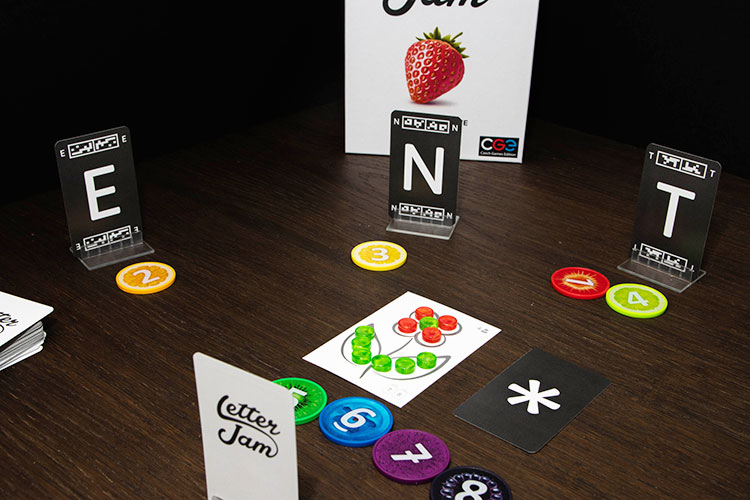
  • Letter Jam: If you like a good word puzzle and anagramming game, Letter Jam is perfect for you! You’ll need a few friends who are equally enthusiastic, or very strong persuasion skills. This is a co-operative word puzzle game where groups give clues to each other to solve each of their letters that are hidden from them and seen by everyone else. Once you have all your letters, anagram them to create the final solution. You score points based on how many in the group got their entire words right, so make sure you’re all moving together co-operatively!
Image result for Letter Ja, game

Thoughts: Indistractable by Nir Eyal

timebox.png

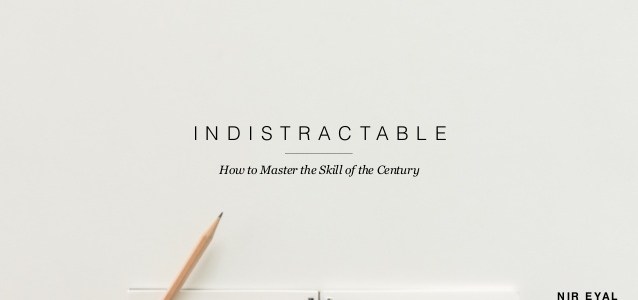
The first key point I should mention here is Nir Eyal’s emphasis on time-boxing as a valuable technique in productivity. Simply having checklists and to-dos elongating each day will not do the trick for productivity if we are not mindful of the pace at which we work or the time we have in a day to complete those tasks. Another technique I have found pretty useful is prioritizing work and picking up as many as possible in a day, but of course that becomes harder when we have work with deadlines in the mix with passion projects and time taken to relax. Eyal’s solution of time-boxing takes this into consideration, which I think is a valuable mention. Here’s another great article on time-boxing that I found useful.

“The people we love most should not be content getting whatever time is left over. Everyone benefits when we hold time on our schedule to live up to our values and do our share”.

family.png

Not scheduling time for our family and close friends while we schedule the rest of our week will certainly lead to disaster. Personally, I’ve found that I tend to forfeit the video calls with my parents when burdened with assignments and that I almost always reach friends’ gatherings later than I intend to because of other work that needed my attention. It makes so much more sense to schedule your day including time for your relationships, so that you’re not choosing between good sleep or talking with your boyfriend at the end of a long day.

“We implemented a 10 minute rule and promised that if we really wanted to use a device in the evening, we would wait 10 minutes before doing so.”

For me, this simple rule was eye-opening in its results, decreasing temptations to unlock my phone for absolutely nothing, spending minutes re-reading headlines I’d already looked at, opening up Whatsapp to check if I had any new messages (when my notifications are turned off), or re-checking and re-reading emails. Setting this small time requirement before unlocking phones when studying or when you’re out with friends might just create the difference between productivity and time helplessly lost surfing the unlimited web.

“Phubbing, a portmanteau of phone and snubbing means to ignore when in a social situation by busying oneself with a phone or other mobile device.”

I’m sure you’ve done this, as have I. I’m also certain you’ve been annoyed at your friends doing this around you. For me, this was a reminder to stop.

“Schedule time for yourself first: By time-boxing ‘you’ time and faithfully following through we keep promises we make to ourselves.”

original.jpeg

Just as we set aside time for relationships, it becomes obvious that we need to do the same for ourselves, demanding time taken from our schedule to see how we are coping up with the week or the month. Taking this time means we get to slow down and reassess our goals – that we have the possibility of changing and restructuring our week if we have to. For me, a weekly time off to look at my schedule made sense, a time for me to rewrite the goals for the week if needed or push myself more when necessitated.

– Swathi Chandrasekaran

Once again, here’s me on Goodreads! Say hi, drop book recommendations and let’s connect over more reads.

How and Where: Acquiring books in NYC

As an eager reader who moved from Chennai, India to New York City, the exposure here to more readers in every direction I see has been incredibly beautiful. There’s a strong urge to go chat with a reader studying Yuval Noah Harari’s Lessons from the 21st Century in a crowded subway compartment when your recent favorite read has been Sapiens by the same author. Seeing Kindles out on the bus rides, people poring over books at Columbia, sitting leisurely with one at Central Park and cafes is a wonderful sight to see, especially if its a book whose title I recognize!

There are also the cons, though. Books are expensive here. Shelling out 20 dollars for a book here when one switch to amazon.in (India’s marketplace) displays on retail priced at Rs 499 (~8 dollars) gives one the unease of splurging. As a student at a not-so inexpensive graduate school, I have felt this twinge of unease innumerable times as I try to pick a book from bookstores here.

How else does one acquire books? I was thoroughly shocked, and immensely surprised by the scale at which the incredible New York Public Library functions here! My reading life has been so fortunate thanks to this resource, and so here’s how you can get yourself started with an NYPL membership (it’s ridiculously easy!). I’ve come to realize not everyone has this powerful resource on our side and we attempt to get our hands on the next book we want to travel with, so here is a quick why and how-to of getting an NYPL membership.

Why should you get an NYPL Membership?

There are over 90 libraries across New York, and the entire catalog is available online which includes e-books, CDs, DVDs, printed books & magazines that can be delivered to the library nearest to you for your convenience. You can request holds for books that aren’t currently available and be notified when they are, download books straight to your Kindle or other e-readers, and even get your hands on some academic books! All of this is COMPLETELY FREE! 

How-to: 

What you need: Just one piece of document showing your residence in NYC/NY State (this could be a mail you received or a copy of your lease etc)
nyc-library-card-museums

  • Get a copy of mail/lease document stating your full name and New York City/New York State residential address
  • Any Photo ID proof (University ID, work permit, DL, State ID…)
  • Visit your nearest NYPL
  • Inform the librarian that you’d like to start a new membership
  • Fill in a short, one paged form (~5 minutes) [You can also pre-fill this online]
  • Submit the form and show proof of address (from first point) to the librarian
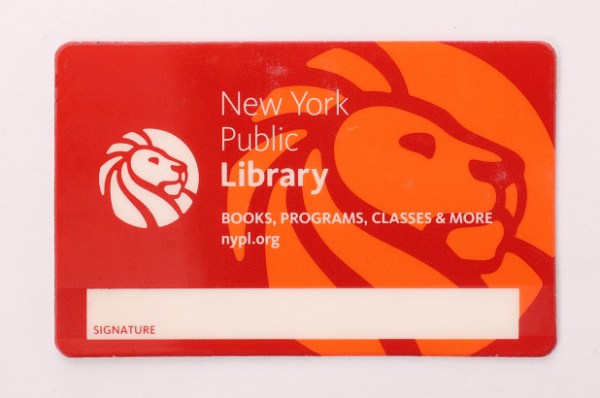
  • And that’s it! Your incredible librarian will hand you one of these, and you’ve successfully unlocked the NYPL membership!

Screen Shot 2019-10-06 at 9.12.17 PM.png

If you’re near Columbia University, the Morningside Heights Library (115, Broadway) is the closest!

I hope this helps! If you have another resource that you would recommend for readers, do leave a comment below. I’d love to find new avenues to get books too!

Resources:

Locations: https://www.nypl.org/locations/map

More Information: https://www.nypl.org/library-card

You can connect with me here on Goodreads to discuss more about books and recommend some.

– Swathi Chandrasekaran

A Wonderful Read: A Little History of Religion by Richard Holloway

Through my childhood, I’ve had the pleasure and discomfort of sitting through innumerable rituals at home, religiously uttering words that made no sense to me, partaking in every festivity until they became routine to me. The way my legs would cramp up after a few hours of sitting cross legged on the floor, the pangs of hunger we’d feel as we waited for the rituals to get over so we can eat, and what now I think of as the most curious ritual I’ve performed – placing carefully cooked and colored balls of rice on our terrace for our unfriendly neighborhood crows while praying that all the best things happen to the men in the family. We also had rituals where as a ten year old, I was expected to pray and hope for the best husband. Things rarely made sense then.

I’m sure you have some stories of your own. I’m not saying that this book explains why that particular notion started, why I would be woken up at 6 to feed the cawing crows that I was terrified of, but it definitely to me lent a different way of looking at religion. A way of putting things into perspective for the bad and the good. Everything my parents said, and my grandparents spoke about is there in that one chapter of Hinduism but it made so much more sense reading it now and being able to think about the chronology (the supposed one, in some cases).

The author’s writing style is straight-forward, seasoned with some lines of wry humor every now and then. His utter devotion to rationality in arguments is what won me over, and his presentation of multiple sides of the delicate topic for me came through wonderfully (but to begin with, I was and am atheist, perhaps that affected my capacity to tolerate his commentary). The one thing I’d wish for was that more was said about eastern religions, although what was said already held a high potency and helped me understand religion a little better.

Here are two beautiful quotes from the book I’ll leave you with:

Religion’s preoccupation with life after death so often made it an enemy of life before death.

Religion can be a drug that soothes the pain of existence. Only an ungenerous mind would fail to sympathise with those whose misery is eased in this way.

I hope you see the beauty in these words the way I did. If you do, you should reach out and grab a copy of A Little History of Religion as soon as you can. Happy reading!

– Swathi Chandrasekaran

If you want to see more such reviews, connect with me here on Goodreads!