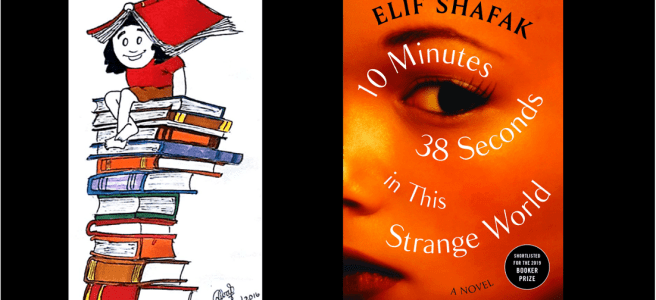
I’ll start by saying I had no preconceived notions about this read before I picked it up. The only information I had on the book were from the blurb and cover, having received it as a gift from a friend. My disappointment therefore, stems entirely from the beauty of the initial parts of the book and the colossal carnage of the characters and plot that followed in later parts.
The author takes care to set out a detailed and exact representation of the world through part one, as she narrates the world through Leila’s eyes. The world is flawed, and the flaws exist for no rhyme or reason. The author explores this idea over and over again, through the numerous sufferings of her protagonist Leila – a woman abused in her childhood and exploited in Istanbul as she strives to create a life for herself. So real are the incidents in part one that the futility of hope and random allocation of privilege, luck and chance shine even when the protagonist is on the receiving end of such niceties. Leila is one of the lucky few to escape an acid throw with only a gash on her back, and is blessed with a regular marital life after being a whore at an Istanbul brothel for years. Even in the narration of these chance events for example, Elif takes time to note the jealously of Leila’s fellow prostitutes, showing that what Leila got was simply another unfair dose of luck that benefitted her instead of someone else this time. Part one is filled with such events which are deeply rooted in reality, each of which made me deliberate on this unfair life we lead.
Hence the sharp transition of part two into a Wodehousian affair led by Leila’s close friends (whose only similarity seems to be their eccentricity) shocked, infuriated and disappointed me as a reader. The five friends of Leila, once so beautifully described through Leila’s thoughts now were skeletons of characters, each easily explained by one adjective – the devout, the cowardly, the loyal, the sick and the other (who didn’t even matter in the end.) The characters take some insane decisions that would never pan out, and go about enacting it through painful chapters that read like a young-adult fiction with a diverse set of characters. It made the beautiful characters from chapter one seem like they were only there for a diversity quota.
Part three of the book speaks about the soul of Leila, now demised. This is so antithetical to every open ended question in the book on the existence of souls and whether they were only religious constructs.
A book with amazing promise and a sharp let-down. I highly recommend that you skip this book unless you want to experience investing in a disappointment.

 Perplexed Potatoes